GOLDEN RULE MOMENTS
Bringing heaven down to earth through action and faith
Albert Celoza
Special for The Republic USA TODAY NETWORK
Rabbi Shmuly Yanklowitz is working to fulfill his dream: “to bring heaven down to earth.”
Through his innovative Beit Midrash study house and Arizona Jews for Justice, Yanklowitz embodies a unique approach to spiritual activism that bridges the gap between contemplation and action.
“The world doesn’t change on its own. It changes when people refuse to look away, when they show up, speak out, and take responsibility for each other. Activism isn’t a hobby — it’s a moral obligation.”
Rabbi Yanklowitz’s journey to Jewish leadership began in an interfaith household where his Christian mother and Jewish father provided “a strong multi-faith upbringing.”
This diverse religious background shaped his inclusive approach to spiritual work and his emphasis on universal human values. To date, he has written more than 30 books that cite sources not only from Jewish scriptures and rabbinic writings but also draw inspiration from various world religions.
Rabbi Yanklowitz explains, “Spiritual activism is important as it starts with empathy.”
He believes that authentic change comes not from rhetoric but from embodying the values one espouses. Drawing inspiration from towering figures like Elie Wiesel and Mother Teresa, Yanklowitz emphasizes the importance of advocating for one’s values through direct action. As Wiesel taught, the goal is not to “make the world Jewish, but make it more human.”
This philosophy guides Yanklowitz’s work as he seeks to address suffering wherever he encounters it.
Rabbi Yanklowitz’s commitment to social justice was crystallized through his experiences visiting villages in Asia, Africa, and Latin America. Encounters with poverty and suffering reinforced his understanding that his “spiritual need is someone else’s physical need” – a profound recognition that authentic spirituality must translate into tangible help for others.
Rather than establishing a traditional synagogue, the rabbi founded Beit Midrash – “a study house, not a prayer house” that offers classes, invites guest speakers, and organizes fellowships, emphasizing the Jewish tradition of learning as a path to understanding and action. For the rabbi, learning and action are inseparable; study serves as the foundation for meaningful engagement with the world.
Beit Midrash operates the shalom pantry, both stationary and mobile, supported in part by two “Let’s Be Better Humans” humanitarian buses that bring critical supplies directly to those living on the streets and in crisis. Hundreds of youth, teens, young adults, and people of all ages on transformative service-learning excursions aboard the “Let’s Be Better Humans” bus. These hands-on experiences allow young people to engage directly with their communities, develop a deeper understanding of social issues, and contribute meaningfully to outreach efforts. Arizona Jews for Justice represents an attempt to maintain a “distinct Jewish faith” while “expressing this as we come together with kindness and humility.”
Central to Yanklowitz’s philosophy is the concept of “middot” – character traits that are developed through service. “While serving others, we develop and cultivate our inner lives,” he explains. This reciprocal relationship between helping others and personal growth reflects his belief that spiritual development and social action are not separate pursuits but complementary aspects of a complete spiritual life.
To sustain his demanding work, Yanklowitz maintains careful attention to his own spiritual needs. He observes shabbat as “the day of rest and rejuvenation,” surrounds himself with “good people, like my family,” and follows “spiritual practices like prayer and meditation.” This commitment to selfcare reflects his understanding that effective service requires regular renewal.
Together with his wife, they “help each other actualize their potential,” having both become vegan upon marriage as part of their shared commitment to ethical living. His marriage exemplifies his collaborative approach to growth. The rabbi sees marriage as society’s “highest goal to shape each other to fulfill our beings,” arguing that “our spiritual crisis is due to a lack of commitment to marriage.”
While acknowledging that we can be spiritual individually, Yanklowitz argues it’s “a mistake not to be religious. “We need ritual and community, which in turn will build relationships.” Individual spirituality, while valuable, requires the structure and community that religious practice provides to reach its full potential.
His ultimate vision remains clear: “We do not want to leave people behind.”
This drives his unique blend of rigorous study, spiritual practice, and direct action. 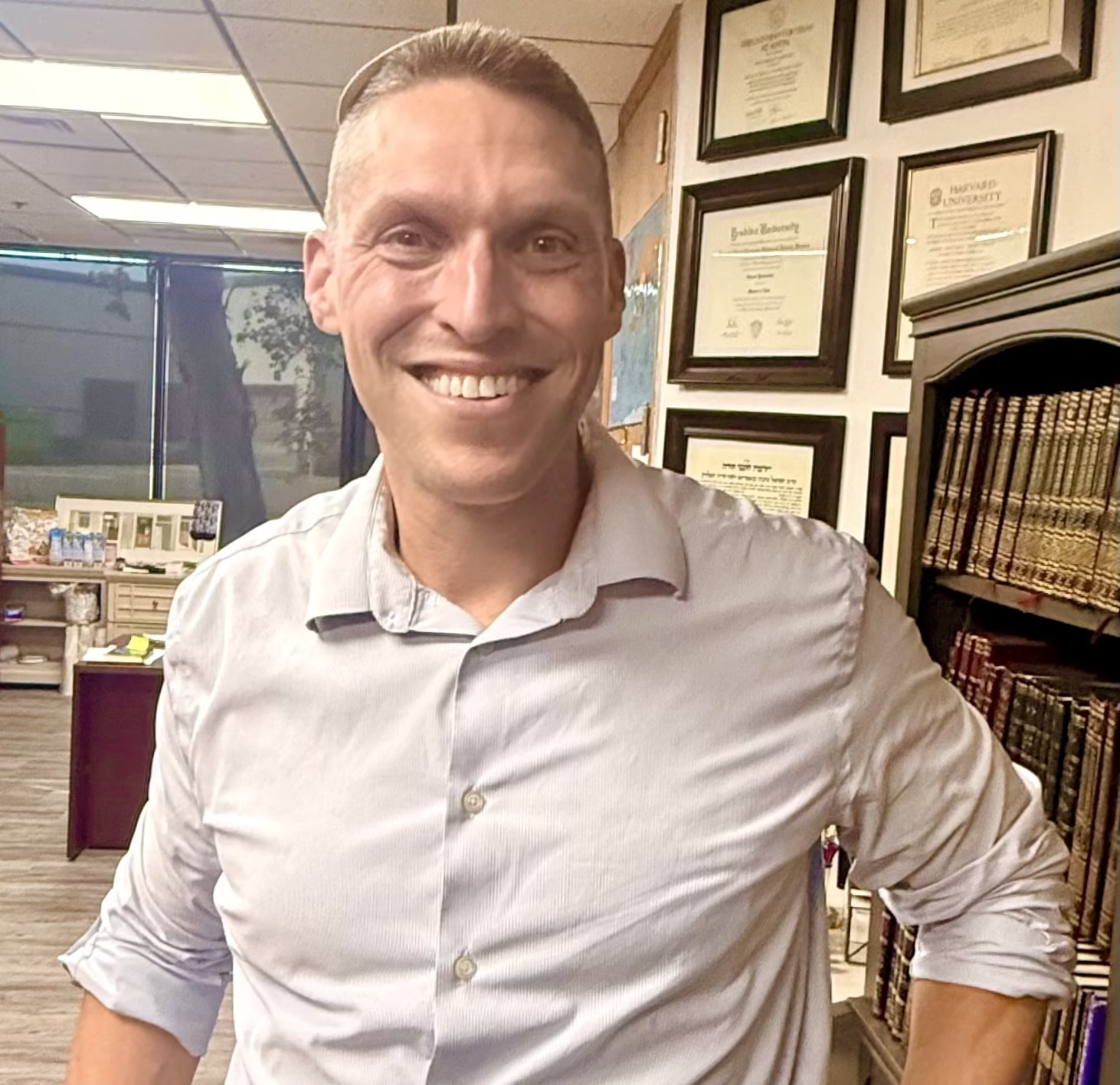
Dr. Albert Celoza is the Executive Director of the Arizona Interfaith Movement.
Copyright © 2026 The Arizona Republic 4/11/2026
Use of this site signifies your agreement to the Terms of Service and Privacy Policy.