GOLDEN RULE MOMENTS
Recognizing inherent nobility in every student
Albert Celoza
Special to The Republic USA TODAY NETWORK
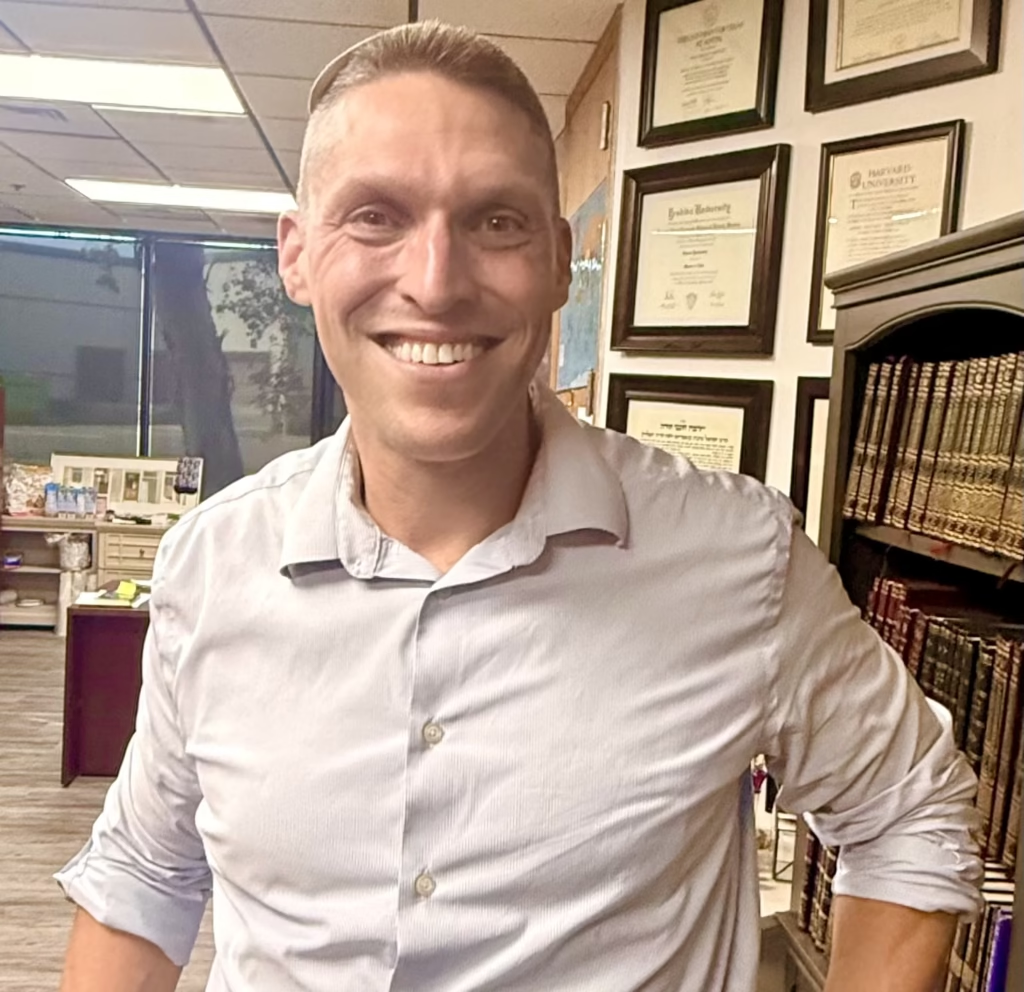
 Dr. Paul R. Harasha sociology educator and member of the Bahá’í Faith, brings a unique perspective to the practice of the golden rule in teaching at a community college.
In this interview conducted by Albert Celoza, Dr. Harasha explores how treating students with dignity and respect transforms lives. He discusses the challenges of serving diverse populations, balancing academic rigor with compassion, and recognizing the inherent nobility in every student.
The following question-and-answer exchange has been edited for space.
How is teaching different compared to other settings?
Teaching is unique because students are not simply customers. They are people in the process of developing and becoming. In sociology, we talk a lot about social structures, inequality, and opportunity and in a community college setting you see directly how education can change the trajectory of someone’s life. Applying the golden rule in teaching means recognizing the humanity and potential in every student, even when they are struggling or discouraged.
In the business world, success is measured more by efficiency and profit. In education, especially community college education, success is measured by growth and transformation. The golden rule reminds me that every interaction matters. A student may remember for years whether a teacher treated them with patience, fairness, and respect at a vulnerable moment in their life.
As a Bahá’í, I also believe every person possesses inherent nobility and spiritual worth. Nobility is considered an inherent spiritual quality given to every human by God. This perspective deeply shapes how I approach everyone.
How does the diversity of a community college setting shape how you practice the golden rule?
Community colleges serve an extraordinarily diverse population: working parents, first-generation students, veterans, single parents, returning adults, and recent immigrants. That diversity constantly reminds me not to make assumptions. The student who
seems disengaged may have just finished a night shift; another may be juggling childcare, supporting a family financially, or navigating immigration or health crises. Practicing the golden rule here means creating a classroom culture of dignity and respect. It means recognizing language and cultural differences as assets that enrich learning.
How do you balance high academic standards with compassion and understanding?
Balancing high academic standards with compassion is not a contradiction. Far from diminishing rigor, humane treatment often elevates it: students will meet higher expectations when they know their instructor believes in them. The golden rule in education does not call for lowering standards; it calls for consistent, fair, and transparent expectations combined with encouragement and support. Accountability remains essential, but accountability that excludes compassion risks alienating the very students we intend to empower. I’ve seen students rise to demanding goals when standards are paired with communication, feedback and sincere concern.
Have you experienced the golden rule coming back to you?
The golden rule also returns to teachers. I’ve received notes from former students years later, saying that a moment of encouragement or a patient conversation made the difference in continuing their education or applying to graduate school. Those messages are the true measure of success for me. They confirm that simple human kindness can have lasting impact.
What advice would you give educators about bringing the golden rule into their teaching?
Never underestimate the importance of dignity. Start by listening. Practice humility. Be fair and consistent, but also willing to see students as whole persons. Validate their backgrounds and treat them with the respect you would wish for your own family. Teaching is fundamentally relational; the subject matter matters, but transformation often flows from the patience and compassion we model.
Dr. Albert Celoza is the Executive Director of the Arizona Interfaith Movement, To learn more about the golden rule, visit the Arizona Interfaith Movement website: azifm.org
Copyright © 2026 The Arizona Republic 7/18/2026
Use of this site signifies your agreement to the Terms of Service and Privacy Policy.